
One place name, several outings
Decide what you want to finish before choosing a track. For a viewpoint visit, your destination is the lookout and your return is to the same entrance. For a crossing, the lookout is a point along a route that continues into another part of the park. A loop has its own junctions and returns by different ground.
Online descriptions use Machabée, Macchabée and Machabee. Those spellings alone do not identify the itinerary. Compare the starting point, endpoint and route shape together.
Why Pétrin matters
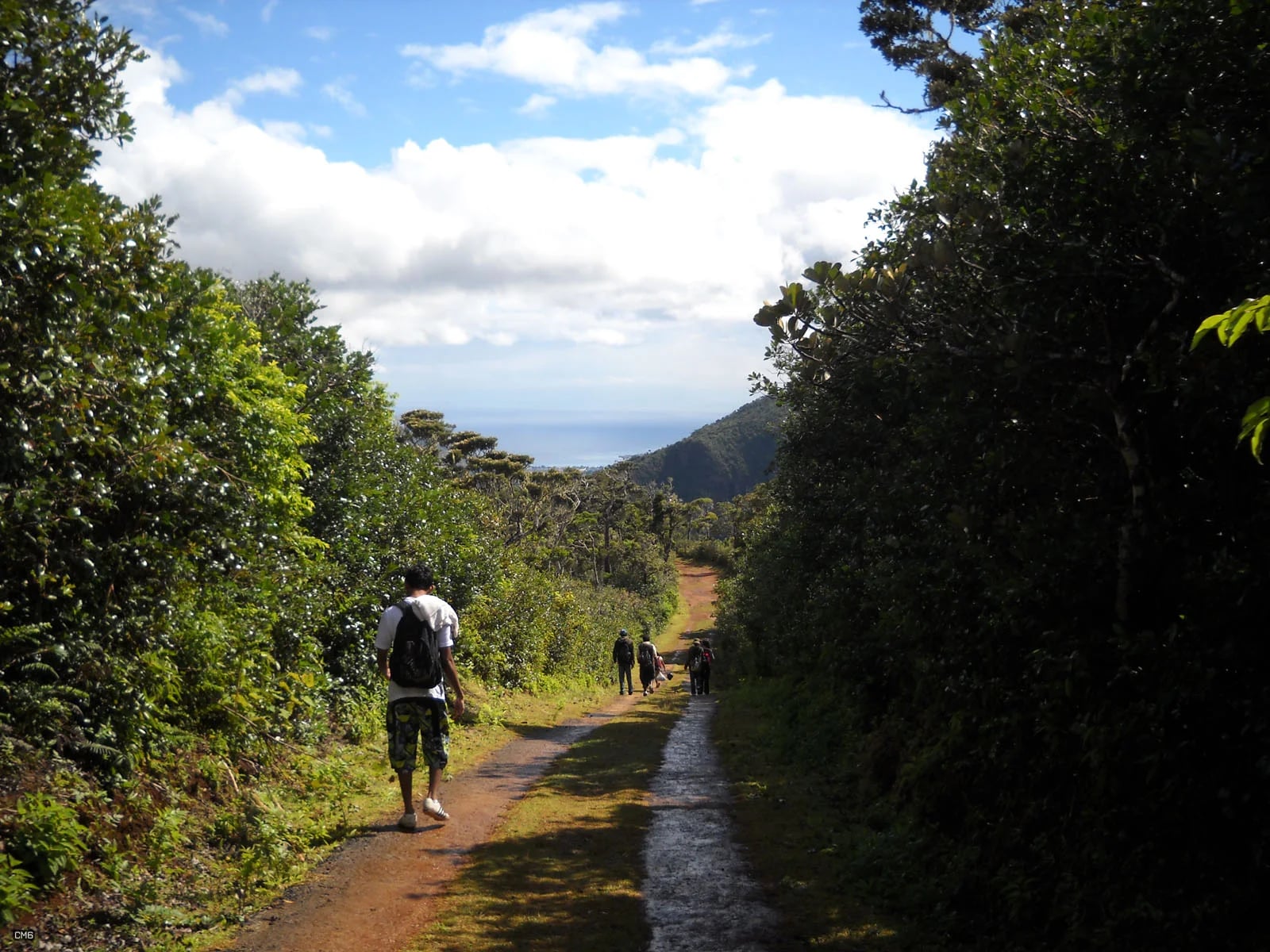
Explore Mauritius describes the approach from Pétrin to the viewpoint along a dirt road, before the crossing narrows and descends the ridge. That distinction helps explain why a photograph from the lookout can appear in descriptions of very different walks.
Choose your transport around the entrance you intend to return to. A driver needs the agreed entrance, not simply a pin for the viewpoint somewhere inside the forest.
Read the distance against the route
The complete Machabée crossing from Pétrin to the lower gorges is 10 km, while the Machabée Forest Loop is 14 km. A walk to the viewpoint and back is a separate outing. Use the distance for your chosen approach and turnaround, not either of these longer routes.
A route app can be useful, but check where its recording begins, whether it continues below the lookout and whether it returns to Pétrin. A small distance on a connector is not the length of your day.
Choose the walk that fits your day
If your priority is a view with little walking, compare the road-accessed viewpoints before committing to this forest approach. If the walking is part of the attraction, build time for stopping beneath the canopy as well as reaching the lookout.
For a group, agree on the same destination and turnaround before leaving. The more ambitious option is not automatically a better shared day; a shorter agreed outing leaves room for an unhurried return.
Settle the return before you start
Check the National Park Information Centre’s access information for the chosen route. The park being open does not confirm every path is available. Take water, suitable footwear and rain protection, and keep your route reference available offline.
Cloud may conceal the distant view. Judge whether you want a forest walk even without a panorama, and choose an alternative if conditions or the group’s energy no longer suit the plan. This guide explains the route choices; it does not provide turn-by-turn navigation.
Make the viewpoint your turnaround
Decide before leaving Pétrin whether you are walking to the viewpoint and back or following a longer loop. Reaching the view is the midpoint of a return outing, so keep food, water and daylight for the way back.
At junctions, compare the direction with your saved route before continuing. Following a sign towards the lower gorges can turn a simple return into a crossing with a different finish. If the group changes its plan, update the return arrangement rather than simply walking farther.
Current access
Access not confirmedWe are awaiting a current report from the National Park Information Centre. Confirm access at your entrance before setting out.
Read park and trail access information →Your questions answered
Is Macchabée viewpoint beside the main road?
No. This page concerns the lookout in the hiking network approached from Pétrin. The roadside Gorges viewpoint is a different visit.
Is the viewpoint walk the 14 km forest loop?
No. The 14 km route is the full forest loop. A return walk to the viewpoint follows a different itinerary.
Can I continue down to the lower gorges?
That changes the outing into a crossing. Confirm that route’s access and arrange your return transport before choosing it.
Sources behind this guide
References used for this guide. Current access is shown separately with its own report date.