
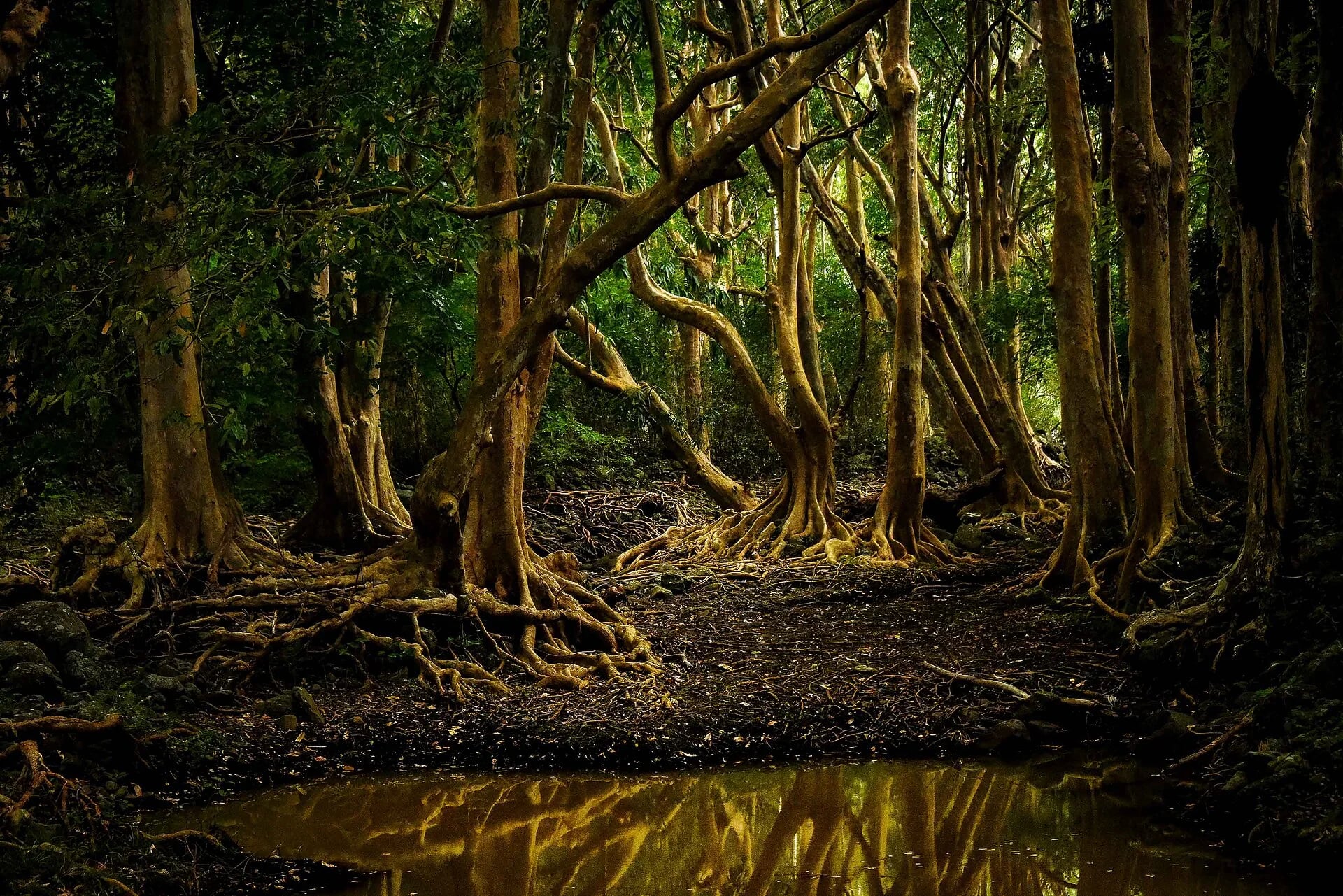
A landscape of different habitats
Evergreen forest, mossy rainforest, cloud forest, scrub and wetlands form a varied landscape across the Gorges and surrounding region. Wetter uplands and drier lower valleys support different communities of plants and animals.
Birds and the work behind their recovery
Echo parakeets, pink pigeons and Mauritius kestrels are central to the island’s conservation story. Their recovery depends on sustained work by the Mauritian Wildlife Foundation and NPCS. Give yourself time to listen and observe, while remembering that wild birds move freely.
Stay on permitted paths, keep your distance and avoid playback, feeding or sharing sensitive nest locations. Get to know the birds of the Gorges.
Plants, bats and forest regeneration
Black ebony, Diospyros tessellaria, is one of Mauritius’s endemic trees. Fruit bats disperse its seeds, helping the forest regenerate. Protecting these relationships matters as much as protecting individual trees.
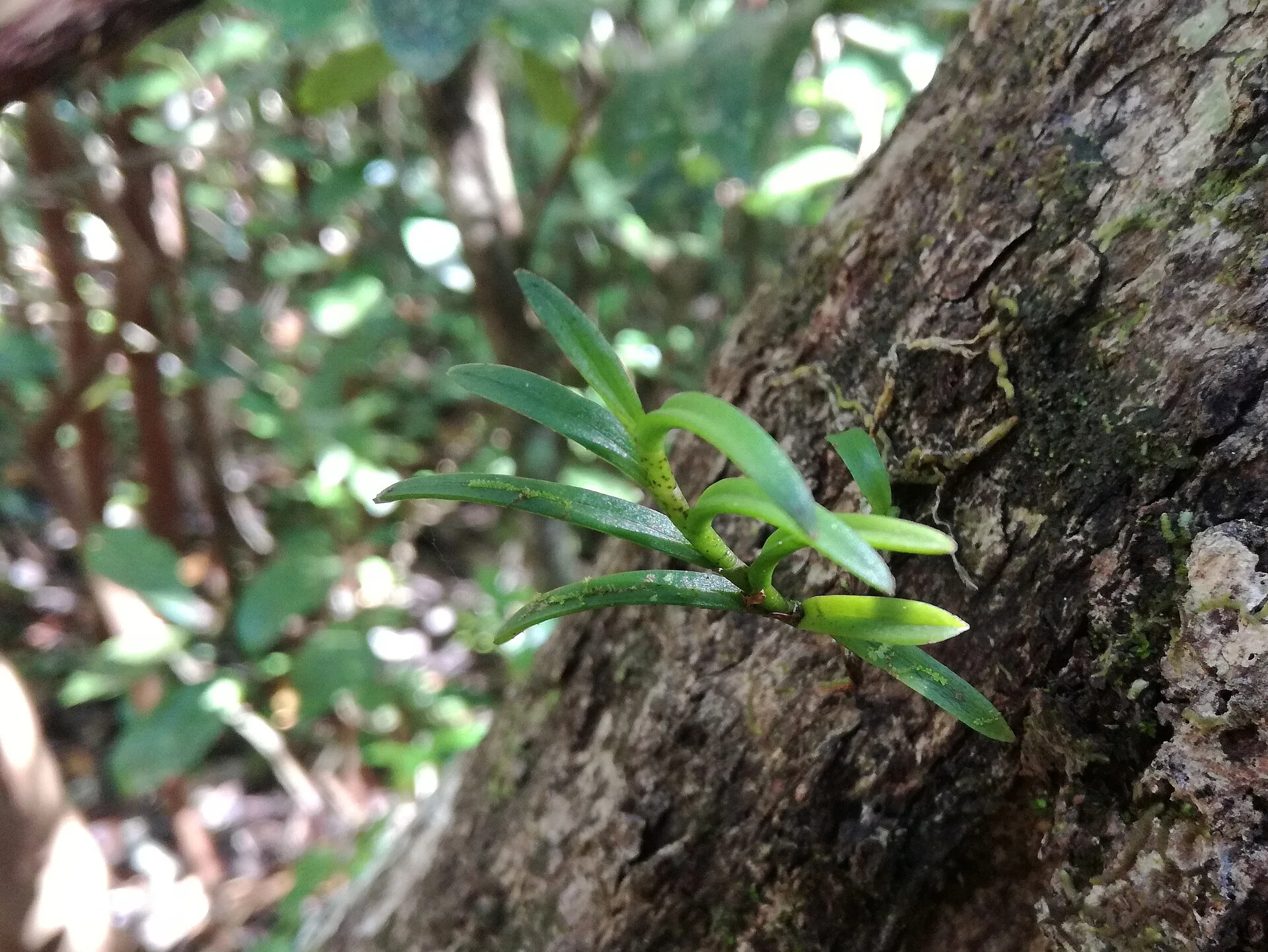
Restoration is active work
Conservation teams remove invasive plants, manage introduced animals, propagate native plants and protect threatened birds. A forest can look green while its native communities are under pressure.
Look closely and leave quietly
Make room for observation on your walk. Stop on the path, listen before moving on and use binoculars rather than approaching an animal. Leave flowers, seeds and fallen wood where they are. A photograph from the trail is a better souvenir than a collected plant.
Read the forest in layers
Look beyond the largest trees. The canopy, branches, trunks and shaded ground form different spaces to observe. Pause where you can stand without blocking the path, and notice how light and moisture change from one stretch of forest to another.
A slow walk can reveal more than a long checklist. Choose a few things to notice, such as leaf shapes, a bird’s call or plants growing on branches. Photograph them from the path so you can compare details later without collecting or disturbing anything.
Native, endemic and introduced
An endemic species occurs naturally only in a particular place. A native species arrived without human introduction but may also live elsewhere. An introduced species reached the island through human activity. These terms describe different relationships with the landscape.
The distinction helps explain the conservation work around you. A green hillside can contain both native and introduced plants. Protecting habitat means supporting the forest community, not simply keeping every patch of vegetation untouched.
Turn a walk into a nature visit
Bring binoculars if you have them, leave space for quiet pauses and keep a small record of what you notice. You do not need to name every species to appreciate the forest. A clear note about shape, colour and habitat is more useful than a confident guess.
Avoid playing bird calls to attract animals, and keep food packed away. Watch from the established trail and let wildlife choose its distance. The forest remains worth visiting even on a day without a rare-bird sighting.